Current Location: Blog >
Taiwan Server
1.
Overview and objectives
The goal is to improve the stability and conversion rate of Taiwan site clusters, balancing cost and attack resistance.Coverage includes servers/VPS, hosting and domain name policies, CDN and caching, DDoS defense, and log monitoring.
Key KPIs include daily visitors, PV, conversion rate, page load time, and availability rate (SLA).
Measurement methods include server monitoring (CPU, memory, bandwidth), CDN statistics, and backend tracking data.
This sharing is based on real site cluster case data and configuration suggestions, facilitating engineering and operational implementation.
2.
Traffic source distribution (sample data).
Below is an example of the 7-day average traffic distribution and conversion rate of a certain Taiwanese e-commerce site cluster.The table displays source, proportion, average daily visitors, and conversion rate (border width 1, centered).
| source | share | daily average visitors | conversion rate |
|---|---|---|---|
| organic search | 45% | 22,500 | 1.8% |
| direct traffic | 20% | 10,000 | 2.4% |
| backlink/recommendation | 15% | 7,500 | 1.1% |
| Social Media | 10% | 5,000 | 0.9% |
| paid ads | 10% | 5,000 | 2.6% |
The above data is used for prioritization: prioritizing the availability and speed of organic search and direct traffic.
3.
Examples of server and domain name configurations (real cases).
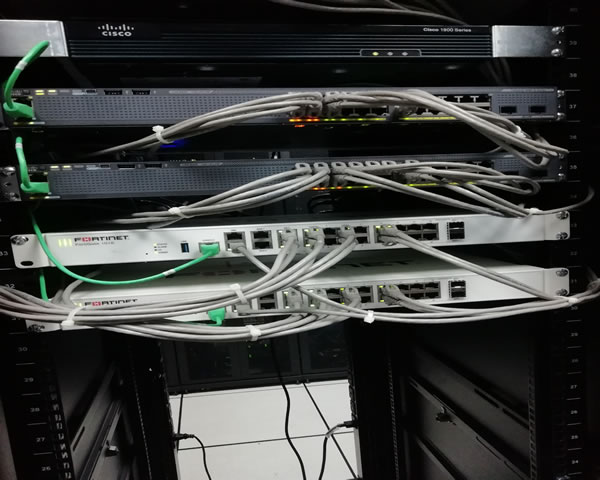
Case: A Taiwanese e-commerce seller (domain example.tw) initially configured the following: 2vCPU / 4GB / 100GB SSD / 100Mbps.After optimization: load balancing + 2 application servers (4vCPU / 8GB / 250GB SSD / 1Gbps), 1 database (8vCPU / 32GB / NVMe).
The domain is registered in Taiwan and DNS hosting is enabled, with low TTL set for fast rollback and switching.
Operating system and services: Ubuntu 22.04, Nginx 1.22, PHP-FPM/Node, MySQL 8 + master-slave replication.
Results: Daily visitors increased from 25,000 to 35,000 capacity capacity, and page first byte time (TTFB) decreased from 500ms to 120ms.
4.
CDN and caching strategies
It is recommended to enable local acceleration on Taiwan nodes and configure cache levels (edge cache + origin cache control).Example of caching rule: Static resource Cache-Control max-age = 604800, HTML uses short TTL (300s) with Stale-while-revalidate.
Enable compression (Brotli or Gzip), HTTP/2, or HTTP/3 to reduce handshake and connection latency.
Set the cache key to include Host, URI, and Query (optionally filtering utm parameters), and cache by device type.
Combined with CDN's origin shield and load balancing, it reduces peak source bandwidth and improves disaster recovery capability.
5.
DDoS defense and monitoring system
Deploy WAF and rate limiting rules to block common attack vectors (SQLi, XSS, scanners).Use cloud DDoS cleaning services (charged at 95th percentile bandwidth) and perform traffic anomaly threshold interception at the edge.
Monitored items: Number of connections, SYN rate, Request rate (RPS), bandwidth abrupt change, error rate (5xx). Threshold example: RPS >5000 or bandwidth >600Mbps triggers an alert.
Logs and visualization: ELK/Prometheus + Grafana, retains original request logs for 30 days for traceability.
Emergency plans: DNS switches to backup CDN, enables black hole or grayscale release, and quickly scale VPS instances.
6.
Optimization of conversion paths and implementation checkpoints
Optimization goals: loading time < 2s, HTTPS enforcement, checkout process < 3 steps, mobile-first experienceServer layer optimization: Enable Keep-Alive, tune nginx worker_connections, set up PHP-FPM process pools and optimize slow queries.
Scenario testing: A/B test changes (form simplification, lazy image loading) and improved conversion through backend event tracking statistics.
Actual effect: Through server upgrades and CDN optimization, a certain site's conversion rate increased from 1.2% to 2.1%, and daily order volume increased from 300 to 525.
Implementation checklist: monitoring SLAs, regular stress testing, automatic domain certificate updates, periodic security scans and backup verification.
- Latest articles
- Backup And Recovery: How To Use Alibaba Cloud For Japanese Servers To Implement Snapshot Backup And Offsite Disaster Recovery Deployment Solutions
- Technical Practice: Automated Deployment And Synchronized Update Solution For Vietnam Site Cluster Servers
- Cluster Multi-IP Server Deployment Process In Taiwan And Node Redundancy Design Scheme
- Summary Of Best Practices For Development And Operations Collaboration In VPS CN2 Deployment In Singapore
- Global Deployment Strategies Combined With Latency Requirements To Develop US Server Pricing Plans That Meet Business Needs
- Japan PUBG Server: Practical Tips And Tools For Cross-region Teaming And Voice Communication
- Startup Deployment Is The Preferred Singapore Cloud Server VPS Cost And Configuration Recommendations
- A Must-Read Guide To Building A Stable Site: Detailed Steps For Configuring Vietnam VPS CN2
- User Experience Analysis: Exploring Whether Taiwan Servers Are Expensive And Affecting Access Speed
- Guide To Choosing Foreign Data Centers: Comparison Of Server VPS And US Data Center Latency And Stability
- Popular tags
Responsibility Division
Purchasing Guide
Public Ip
Foundry
Performance Evaluation Process
Real Estate
Compatibility
Private Network
Vietnam Data Center
Vps Expansion On Demand
Cross-border Network
Node Information
Vietnam Server Software
Cost Calculation
Vietnam Server Upgrade
Server Service
Simulated Website Access
Host Configuration Comparison
Server Settings
Stable Bandwidth
Position Optimization
Coupon
Vietnam Hosting
Purchase On Demand
Ip Blacklist Avoidance
Vietnam Vps Development
IP Selection
Anti-ddos
Vnpt
New Bandwidth
Related Articles
-

Explore The Advantages And Application Scenarios Of Taiwan’s Native Site Server
This article discusses the advantages and application scenarios of Taiwan's native site server, including performance, security and its role in SEO. -

Choose A High-bandwidth Server To Help The Traffic Growth Of Taiwan Website Group
choose a high-bandwidth server to help increase the traffic of the taiwan site group. detailed reviews and introductions will help you find the best and cheapest server solution. -

How To Quickly Connect To Games And Applications On Taiwan Servers
this article will introduce how to quickly connect games and applications through taiwan servers, covering server configuration, vps selection and optimization techniques.